

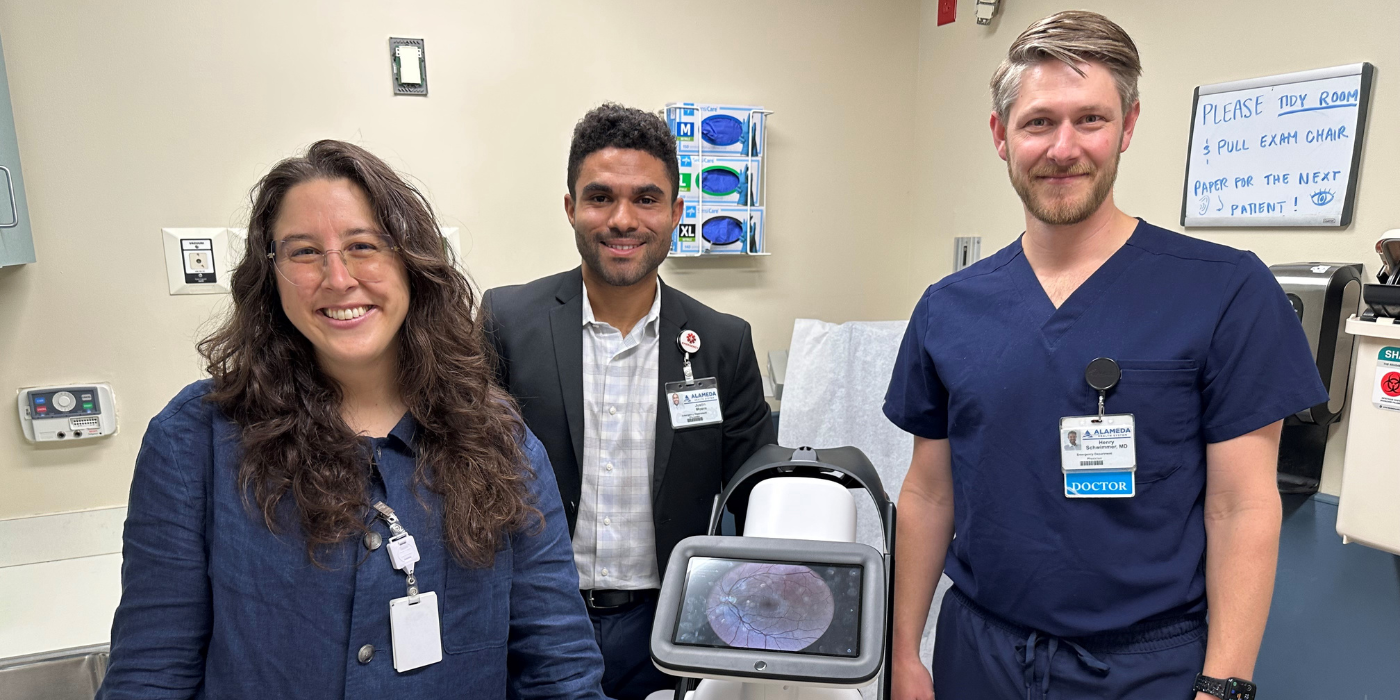
New retina cameras are helping Alameda Health System (AHS) emergency department providers quickly identify and treat patients’ vision problems, providing faster diagnoses and ensuring providers catch disease before it leads to permanent vision loss.
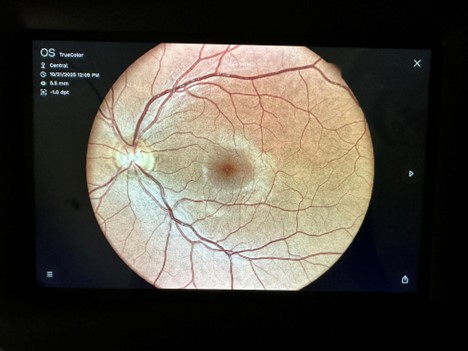
Now, patients who arrive at the Wilma Chan Highland Hospital Campus emergency department with vision problems will be evaluated with the camera, which shows providers the back of the eye – an area that is difficult to see without specialized equipment.
Justin Moore, MD, vice president of system innovation, helped obtain and operationalize the cameras, which were donated to AHS via anonymous donors and the Alameda Health System Foundation (AHS Foundation).
Moore said diseases like hypertension and diabetes can damage the retina, sometimes causing tears, detachments, or bleeding. A retina camera in the emergency department makes it easier for providers to identify these changes early, catch pathology that might otherwise be missed, and get patients to the right care faster — potentially preserving their vision.
“Over half of our patients come through the emergency department as their point of access into the health system. We have this huge opportunity to link those patients to care,” Moore said. “Retinal care is one of the biggest areas we can improve upon because now we will catch it right here in the emergency department.”
Having retina cameras integrated into emergency departments means patients can be better triaged and treated immediately if their condition is urgent. It also reduces the burden on the ophthalmology department by helping on-call doctors assess the situation remotely when appropriate.
Jonathan Hernandez, MD, chief of ophthalmology at AHS, has been a key partner in setting up the cameras and training staff on how to use them.
“This will elevate the care we provide for patients who arrive to the emergency room with vision problems,” Hernandez said. “Doctors will be able to take photographs of the patients’ retinas without dilating the pupil. This advanced imaging technology further elevates the strengths of our emergency department, positioning AHS at the cutting edge of emergency care.”
Expanding emergency eye care is one way that AHS is addressing health disparities. Diabetes and hypertension, which can cause retinal problems and other debilitating eye problems, affect people of color at higher rates than other groups.
“If we screen more patients, that will have a huge impact on community health, especially for the safety-net population that we serve,” Moore said. “This device helps us catch disease before it causes permanent vision loss in patients who might otherwise never make it to an eye appointment.”
The retina camera can also help providers catch a rare kind of stroke. Images taken with the camera are uploaded to a patient’s medical record, allowing for quick access during follow-up appointments. They can also be viewed remotely, meaning doctors can triage cases virtually, allowing for quicker diagnosis.
The first camera started being used in the Wilma Chan Highland Hospital Campus emergency department in October, and another will go to San Leandro Hospital emergency department soon thanks to another anonymous donor.
“We want to thank our incredible anonymous donors who made this life-saving care possible,” said Vera Hannush, senior director of philanthropy at the AHS Foundation. “This project demonstrates how philanthropy and innovation can come together to eliminate barriers to care.”