

A patient arrives at the emergency department with slurred speech and sudden weakness on one side. Within seconds, a stroke alert is called, care teams mobilize, and stroke coordinators begin a coordinated response. At Alameda Hospital (AH) and the Wilma Chan Highland Hospital Campus (WCHHC), both certified primary stroke centers, speed can make the difference between recovery and long-term disability.
“Stroke care is a time-dependent emergency that relies on coordinated action,” shared Cheryl Evans Cobb, RN, interim system stroke program manager. “What makes the biggest difference is how fast symptoms are recognized and how quickly care begins.”
Code stroke responders immediately assess the patient, checking blood glucose and gathering a targeted medical history while other team members prepare for imaging.
The patient is rapidly transported for a CT scan, the critical first step in determining whether the stroke is ischemic, caused by a blocked vessel, or hemorrhagic, caused by bleeding in the brain. Neurology joins in real time to guide treatment decisions as imaging results come in.
That urgency is reflected in system-wide treatment goals. While the national benchmark for stroke treatment is 60 minutes from arrival, AHS stroke teams aim for 45 minutes from door to needle, with a long-term goal of reaching 30 minutes. Door to needle (DTN) time measures how quickly eligible patients receive intravenous clot-busting medication, a key indicator in ischemic stroke care.
Research shows that for every 15-minute reduction in treatment time, more patients leave the hospital able to walk independently, care for themselves, and experience better overall outcomes.
That level of speed depends on close coordination across disciplines, with stroke coordinators helping keep care moving efficiently.
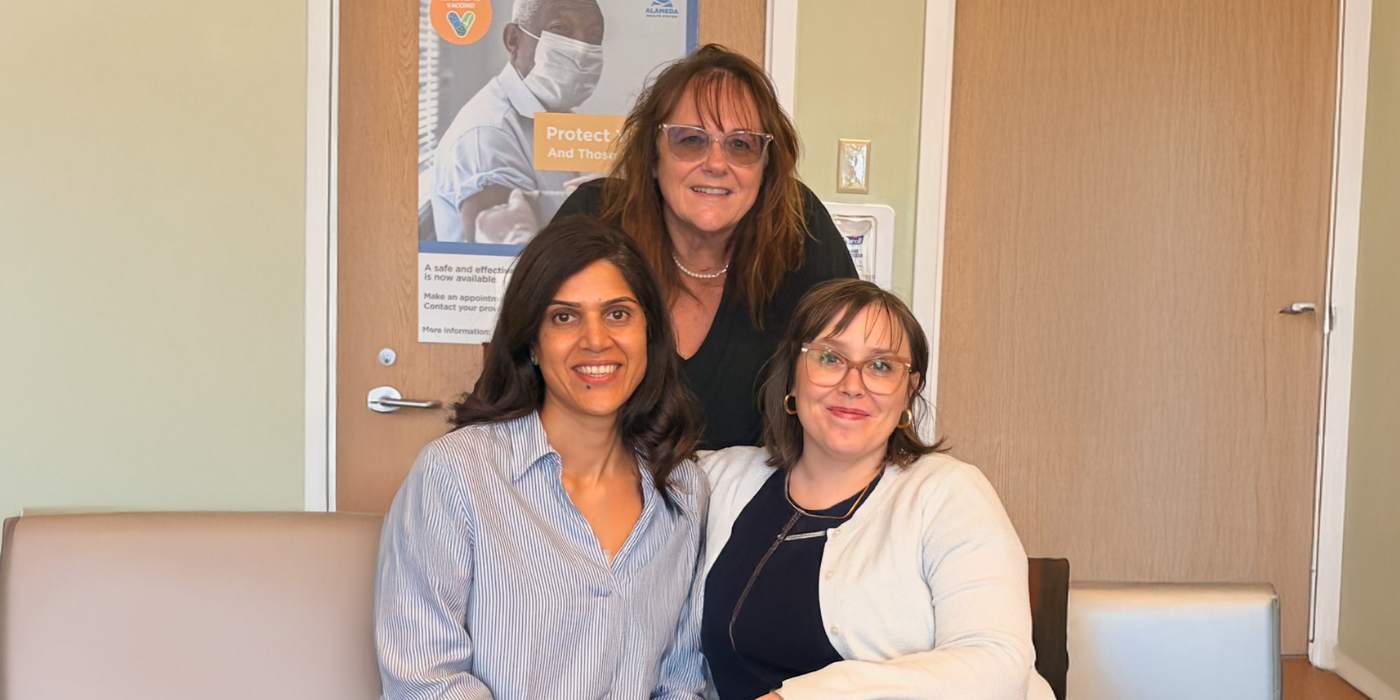
“I love being part of the process,” said Davinder Lell, stroke coordinator at Alameda Hospital. “From getting patients to CT quickly and helping with time-sensitive treatments to doing whatever it takes to ensure they get the care they need right away, even if that means pushing the gurney when every minute counts.”
After imaging, patients are evaluated by neurology. If appropriate, clot-busting medication is administered to restore blood flow to the brain in cases of acute ischemic stroke, while select patients may be candidates for mechanical thrombectomy, a procedure that physically removes the obstruction.
Hemorrhagic strokes require a different urgent approach focused on controlling bleeding and stabilizing the patient, often involving neurosurgical evaluation.
Beyond the hospital response, stroke outcomes are also shaped by broader community factors that influence risk and access to care.
This work is especially critical in Alameda County, where stroke outcomes reflect long-standing inequities. Stroke disproportionately impacts people of color in the United States, with Black adults facing twice the risk of death compared to white adults. Locally, African American residents experience mortality rates nearly double the national average.
Underlying conditions such as hypertension and diabetes remain key drivers of these disparities, compounded by unequal access to preventive care, chronic disease management, and early intervention services in lower-income communities.
Stroke care has shifted from a “wait and see” approach, when damage was often considered irreversible, to one where rapid treatment can reduce disability, prevent recurrence, and even reverse symptoms.
Many delays still occur before hospital arrival when symptoms go unrecognized. To close that gap, stroke teams reinforce BE FAST:
Balance – sudden loss of balance
Eyes – sudden vision changes
Face- drooping or numbness
Arms-weakness or numbness
Speech – slurred or difficult speech
Time – call 911 immediately
For Alison Flower, RN, stroke coordinator at WCHHC, that urgency is matched by the visible impact of treatment.
“I love seeing patients improve with clot-dissolving medications,” said Flower. “It’s powerful seeing someone come in unable to move one side of their body and then regain function after timely treatment. It really feels like saving a life.”
During Stroke Awareness Month, know your risk, recognize the symptoms and BE FAST!