

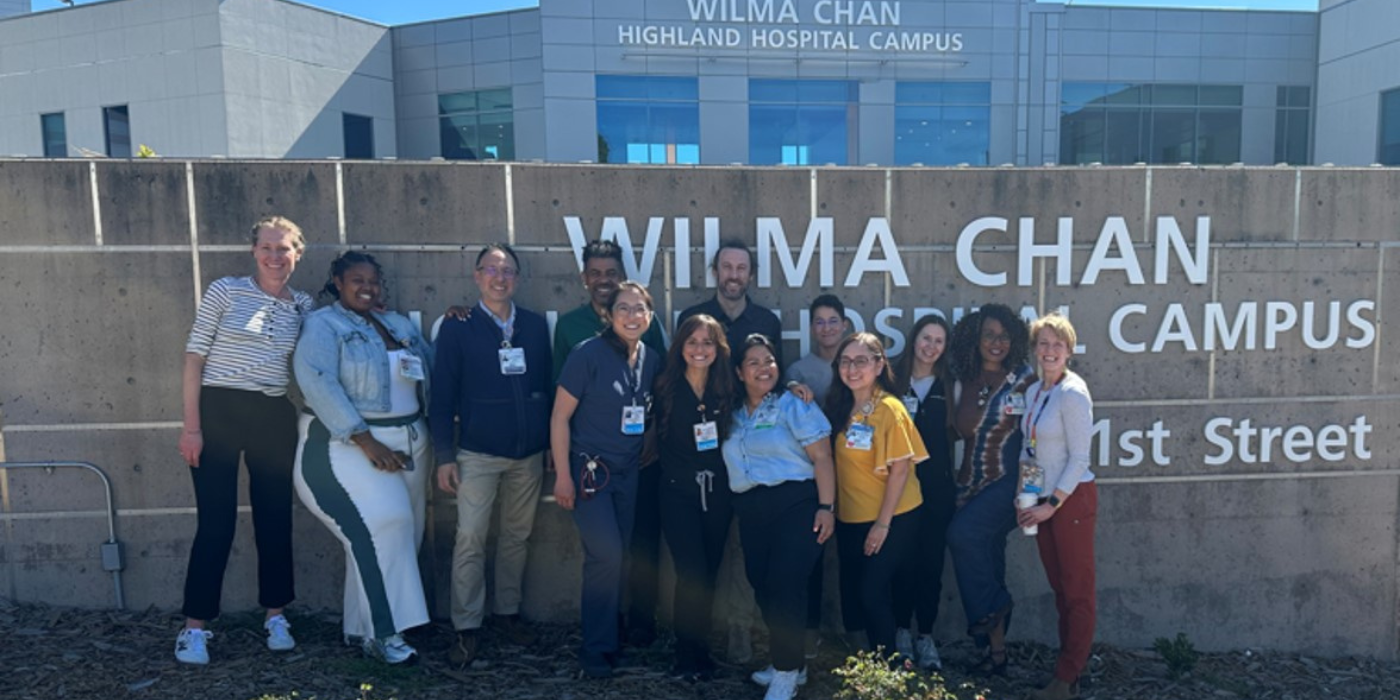
Healing doesn’t stop when a patient leaves the hospital. Recovery continues at home, where patients often face new challenges and need ongoing support. Through REACH, Resources and Engagement After Care in the Hospital, Alameda Health System (AHS) helps patients stay connected and supported during this critical transition”.
“What inspires me about REACH is that it extends our commitment to patients beyond our walls,” said Evan Rusoja, MD, chief of community emergency medicine. “The transition to home can be overwhelming, but this program gives patients a steady hand, someone to turn to and the resources to heal with confidence.”
REACH provides a telehealth visit within 72 hours of discharge from Highland, San Leandro and Alameda Hospitals. The program brings together community health workers (CHWs) and physicians from the Emergency Medicine department to provide coordinated support after discharge.
“CHWs connect patients to social and community resources while providers support them clinically,” said Tashara Hunt, CHW. “Together we make sure every patient gets the care they need.” This team-based approach addresses both clinical and social needs in real time, helping prevent gaps in care.
To ensure patients receive timely, coordinated care, REACH uses an innovative communication system called “parles.” This approach helps the care team respond quickly and stay aligned around each patient’s needs.
“Any member of the team can send a “parle” in Epic which is intentionally designed to be a lateral request, rather than escalation up,” shared Lilly MacRae, RN, director of community health. “This has built a team culture where all skill and knowledge sets are valued equally, and the patients get access to what they need in real time.”
This coordinated approach allows the team to respond quickly and support patients more effectively after discharge.
For example, when a patient continued to feel unwell after an emergency department visit, a community health worker flagged the concern through REACH. The provider was able to assess the patient quickly and ensure they were safely directed back to the emergency department for further care.
Beyond immediate needs, REACH helps prevent complications, reduce avoidable readmissions and keep patients on track with recovery. By connecting patients to essential non-medical resources such as food, transportation and other services, CHWs support the whole person, not just their medical condition.
This comprehensive approach marks an important step in keeping AHS patients healthy, safe and connected after every hospital stay.
REACH was built to reduce repeat visits by pairing CHWs, nurses and physicians in a coordinated post-discharge telehealth model. That approach is already delivering results.
Early pilot data show a 44% reduction in repeat ED visits and a 50% decrease in readmissions, keeping more patients well at home instead of returning in crisis.
These results reflect the impact of a team-based, patient-centered approach and the dedication of the REACH staff.
“I’m proud that AHS made this program official in March and deeply grateful to Dr. Rusoja, Lilly MacRae and the entire REACH team who made it real,” said Andrea Wu, MD, associate chief medical officer, acute care services. “This is what patient-centered care looks like in practice.”
For questions about REACH, contact Dr. Evan Rusoja or Lilly MacRae.