

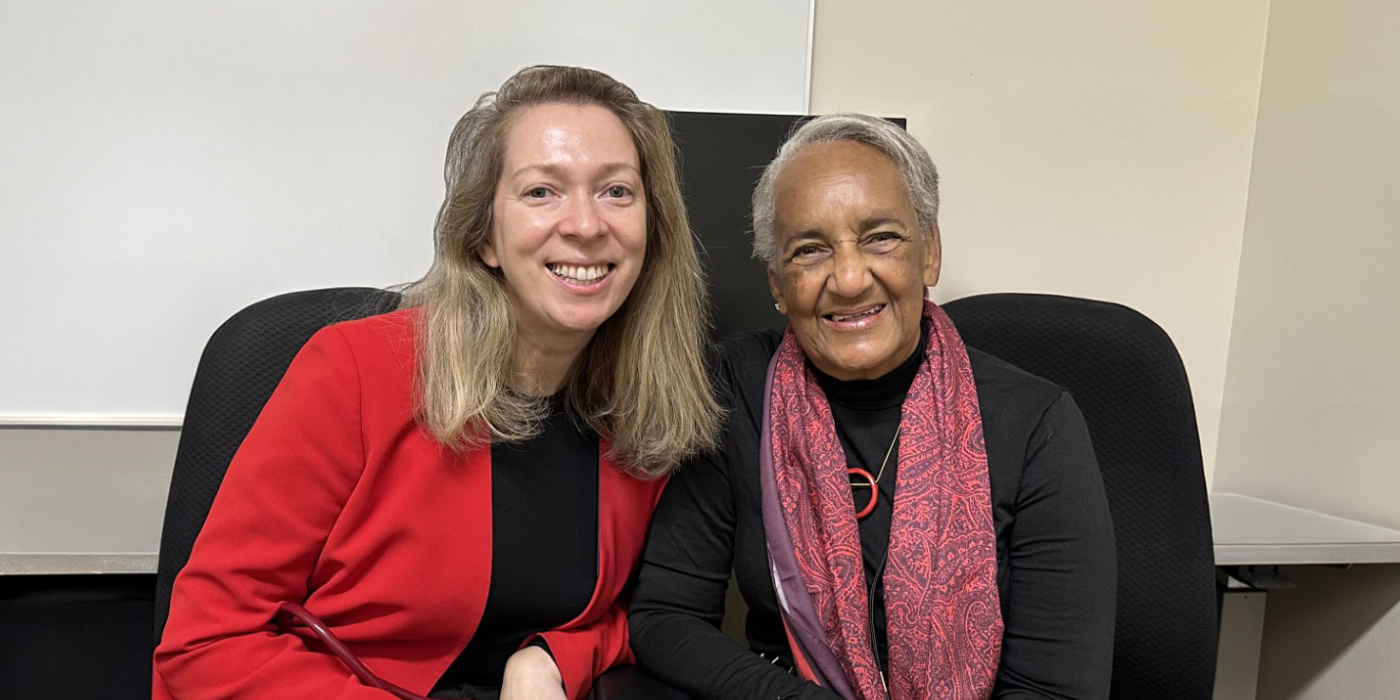
Lynda Wilson ensures patients get the care they need by coordinating physician schedules. Two years ago, she became a cardiology patient at Alameda Health System (AHS). The experience changed how she views heart health and gave her a lesson she now shares with women: always listen to your body and advocate for yourself when something feels wrong.
“I was used to pushing through,” Wilson said. “I felt exhausted and short of breath, even getting winded walking the halls of the Wilma Chan Highland Hospital Campus (WCHHC). I kept telling myself it was stress, that I needed more sleep, or that I just needed to lose a little weight.” It was not until a physician leader she supported noticed she was struggling and asked how she was feeling that Wilson paused and realized something more serious might be happening.
Although she had been seeing a cardiologist elsewhere, Wilson left those visits frustrated and without clear answers. When her AHS physician leader and supervisor connected her with Marina Trilesskaya, MD, division chief of cardiology at WCHHC, everything changed.
The experience quickly became a full-circle moment. Wilson realized she would be treated by a physician she had helped onboard at AHS years earlier. Receiving care within the same system where she worked gave her added confidence as she stepped into the role of patient.
“Dr. Trilesskaya was compassionate, patient and incredibly thorough,” Wilson shared. “She took the time to explain everything and made me feel truly cared for.”
Testing revealed a leaky heart valve that required replacement. The diagnosis came as a shock. “I had no family history of heart disease and never imagined this could happen to me,” Wilson said. Yet fatigue and shortness of breath had been signals her body had been sending all along.
Dr. Trilesskaya shared valve disease becomes more common with age and early recognition is key. “Protecting your heart starts with small, consistent steps,” she said. “Know your heart health, stay active, eat well, get enough rest, avoid tobacco and excess alcohol. Small habits make a big difference over time.”
She also emphasizes that women often experience heart disease differently. While many still believe it mainly affects men, it is the leading cause of death among women. Symptoms may include jaw, neck or back pain, nausea, extreme fatigue or shortness of breath, signs too often dismissed or overlooked.
Having experienced those realities firsthand, Wilson continues to share her story with others. With a successful surgery behind her in 2024, Wilson returned to work, growing stronger each day.
As she prepares to retire at the end of the year after 15 years at AHS, Wilson looks forward to spending more time with her children and grandchildren, tending her garden, a self-taught passion, and enjoying activities that bring her joy.
Reflecting on all she’s been through, she has gained a renewed sense of purpose and a message she hopes other women will hear.
“This experience changed how I think about myself and my health,” Wilson said. “Women are busy putting everyone else first, but we can’t ignore our bodies. Listen to your body and advocate for yourself until you get answers. It can save your life.”
For more information about managing your heart health, visit the American Heart Association.